
We’ve all been there: staring into the mirror, noticing those frayed, split ends and the dull, straw-like texture that screams for a refresh. Yet, the thought of losing years of growth to a “big chop” is enough to make anyone stay away from the salon chair. Fortunately, modern hair artistry has evolved. You no longer have to choose between healthy hair and long hair.
Through specific techniques and strategic layering, stylists can now surgically remove damage while keeping your length almost entirely intact. If you are looking to revitalize your mane without the trauma of a major transformation, these fifteen haircuts and techniques are your secret weapon.
1. Dusting
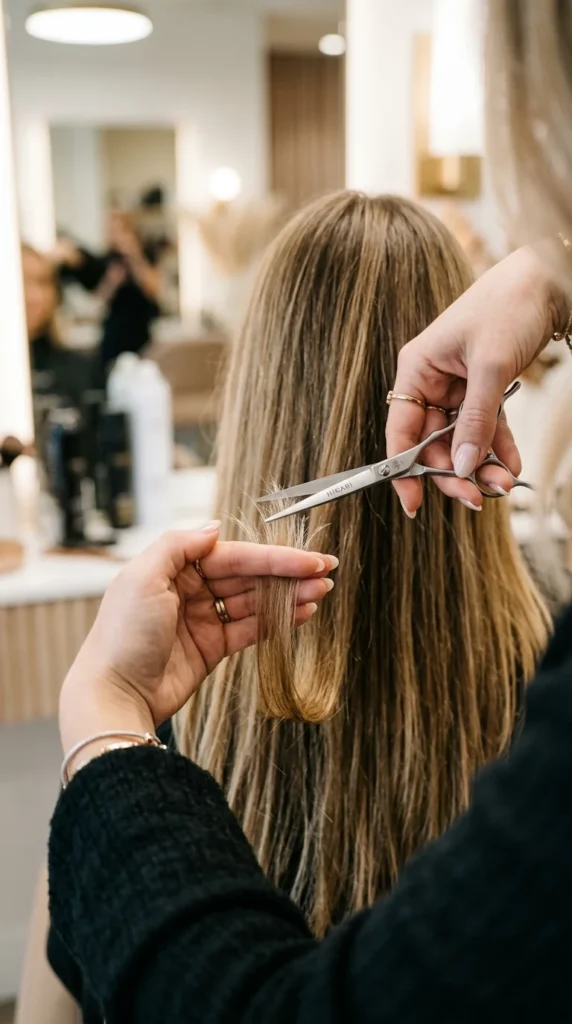
Hair dusting is the ultimate technique for length-obsessed individuals. Unlike a traditional trim that cuts across the bottom, dusting involves “scanning” the hair. Your stylist will twist or tension small sections of hair, allowing the split ends that pop out along the shaft to be snipped away. It is essentially a “search and destroy” mission for damage. You could lose hundreds of split ends and not lose a single millimeter of your overall length.
2. Micro-Trimming
If you find that your ends are starting to look “see-through” or thin, micro-trimming is the answer. By taking off a mere eighth or quarter of an inch every six to eight weeks, you prevent splits from traveling up the hair shaft. This method allows the rest of your hair to “catch up,” resulting in a thicker, healthier-looking hemline without anyone ever knowing you had a haircut.
3. Invisible Layers

Invisible layers, often called “internal layering,” are designed to remove weight and damaged bulk from the mid-lengths of the hair. The stylist cuts shorter pieces underneath the top layer of the hair. This removes the “crunchy” damaged sections hidden within your mane while the top layer remains long and smooth, masking the work done underneath.
4. Ghost Layers
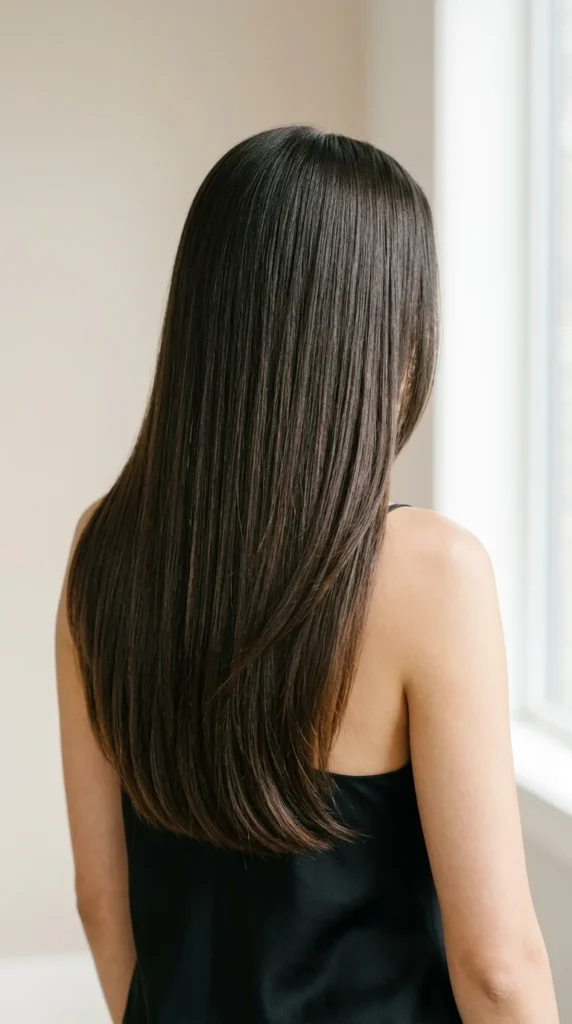
Popularized by top-tier stylists, the “Ghost Cut” is a technique where layers are added so subtly that they are practically invisible. These layers are cut at a variety of lengths throughout the interior of the hair to remove dry, weathered ends that can make the hair look flat. It’s perfect for those with fine hair who need to lose the damage but can’t afford to lose the density.
5. Face-Framing

The hair around our faces usually takes the most beating from heat styling, makeup products, and constant touching. By focusing the “cut” only on the front—creating soft bangs or chin-length framing—you can remove the most fried parts of your hair. This refreshes your entire look and removes significant damage while the back remains at your desired waist or bra-strap length.
6. Point Cutting
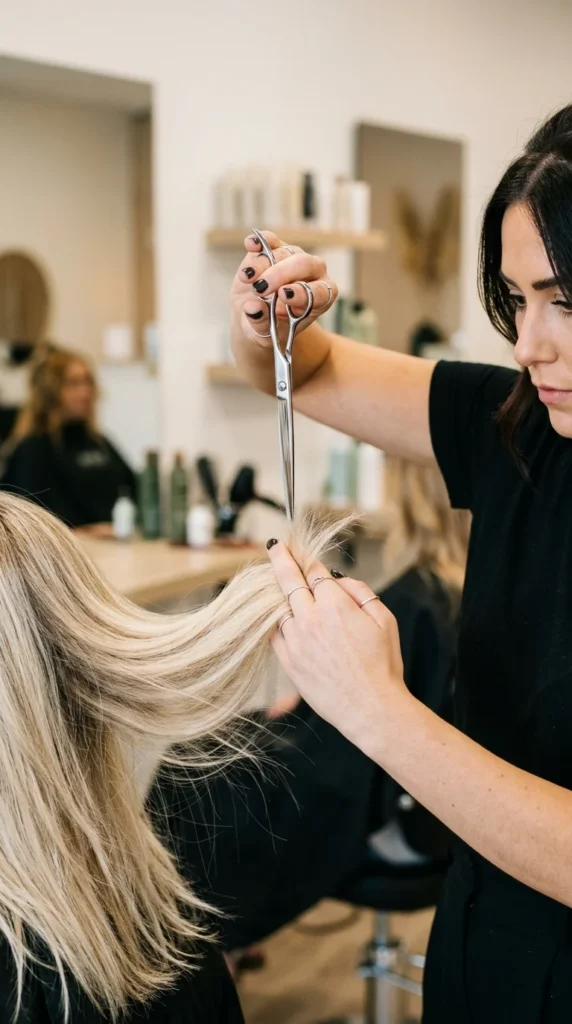
Instead of cutting straight across, which can sometimes highlight split ends, point cutting involves angling the shears into the hair. This technique removes the damaged tips while creating a soft, feathered finish. It allows the hair to blend more naturally, making it much harder to see where the damage was removed, and giving the hair a “lived-in” healthy glow.
7. The Butterfly

The Butterfly Cut is a clever illusion. It utilizes short, voluminous layers around the crown to remove any sun-damaged or heat-damaged canopy hair, while leaving the bottom layers long. When styled, it looks like a short, bouncy cut, but you still have all your length in the back. It’s the perfect compromise for someone who wants a “change” and health without the commitment of a bob.
8. Bottleneck Bangs

If your damage is concentrated at the front or you’ve experienced breakage around the hairline, bottleneck bangs are a lifesaver. This fringe style starts narrow at the center and widens out toward the cheekbones. By cutting these, you chop off the most stressed parts of your hair near the face and replace them with a trendy, intentional style.
9. Tapered Ends

Sometimes damage makes the hair feel heavy and “stiff.” Tapering the ends (often done with a razor or thinning shears on the very tips) removes the brittle weight. This allows the hair to move more freely. By shaping the hair into a soft U-shape rather than a blunt horizontal line, you can cut away more damage at the sides while keeping the center point long.
10. Vertical Layering
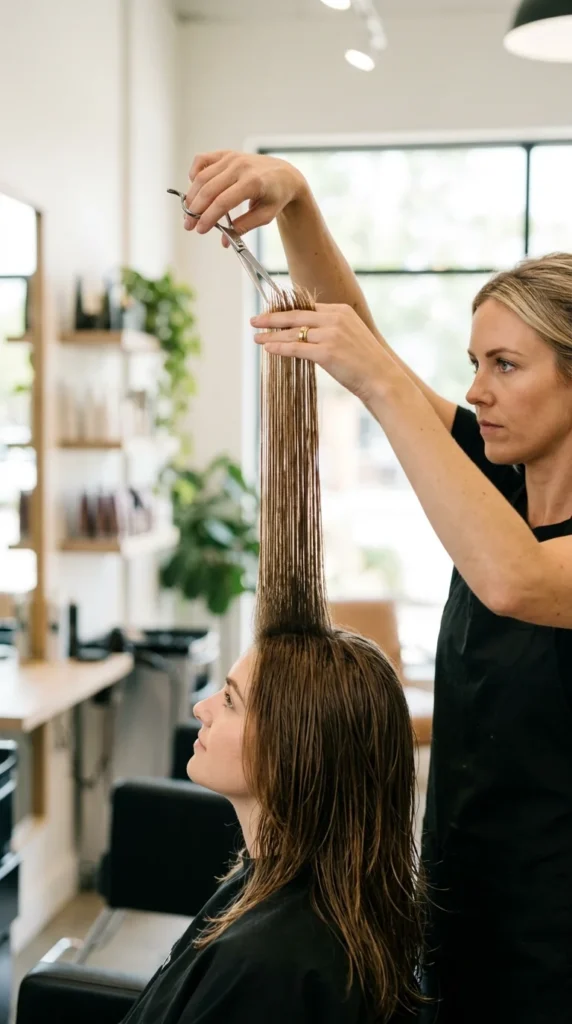
Vertical layering is a technique used to remove “bulk” damage. Instead of cutting layers horizontally, which can leave “shelves,” the stylist pulls sections out vertically. This is particularly effective for those with curly or wavy hair, as it removes the frizzy, damaged outer “shell” of the hair while preserving the integrity and length of the curls.
11. Slicing
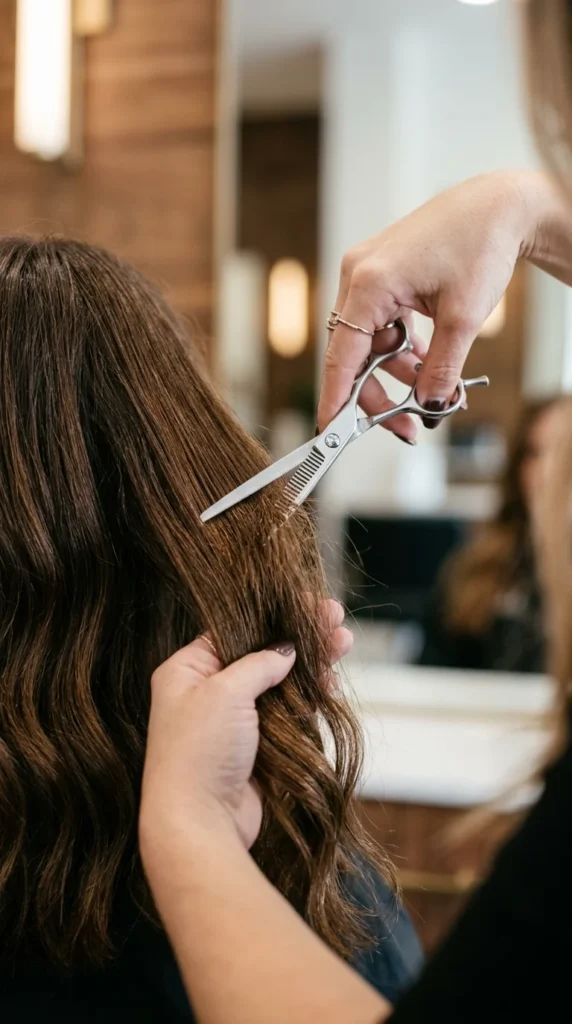
Slicing is a more advanced technique where the stylist keeps the shears slightly open and slides them down the hair shaft. This is used to “thin out” areas that have become matted or excessively damaged by chemical treatments. It’s a precision method to remove the “fuzz” without shortening the silhouette of the hair.
12. The “V” Cut
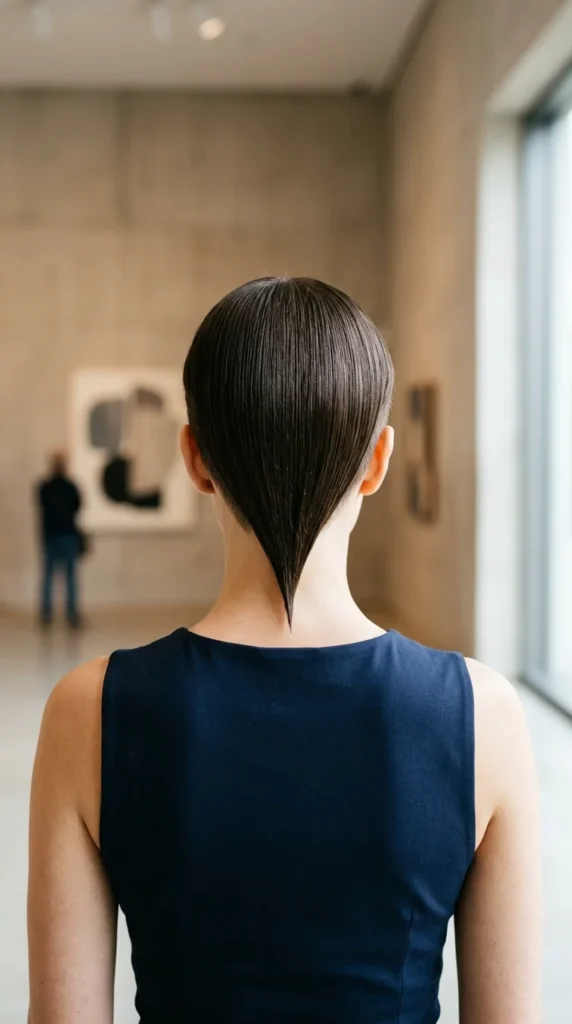
The V-cut is a classic for length retention. Because the hair is cut at an extreme angle, the “point” of the V stays very long, while the hair at the sides—which is usually the most prone to breakage from purse straps and friction—is cut shorter. This removes the majority of the damage while maintaining the appearance of extreme length when viewed from behind.
13. Long Shag

The modern long shag uses a multitude of layers to hide and remove damage throughout the head. Because the style is supposed to look a bit messy and textured, it’s the perfect way to cut out heat damage. The layers blend together so effortlessly that you can lose two or three inches of “junk” in the layers while the bottom-most layer stays long.
14. Wispy Fringe

For those who don’t want a full bang, a wispy fringe can remove the “fried” bits around the forehead and temples. These areas are often damaged by flat irons or blow dryers. By turning these pieces into a soft, intentional fringe, you eliminate the look of “baby hair” breakage and make it look like a high-fashion choice.
15. Blunt Micro-Bob (Inner Layer)
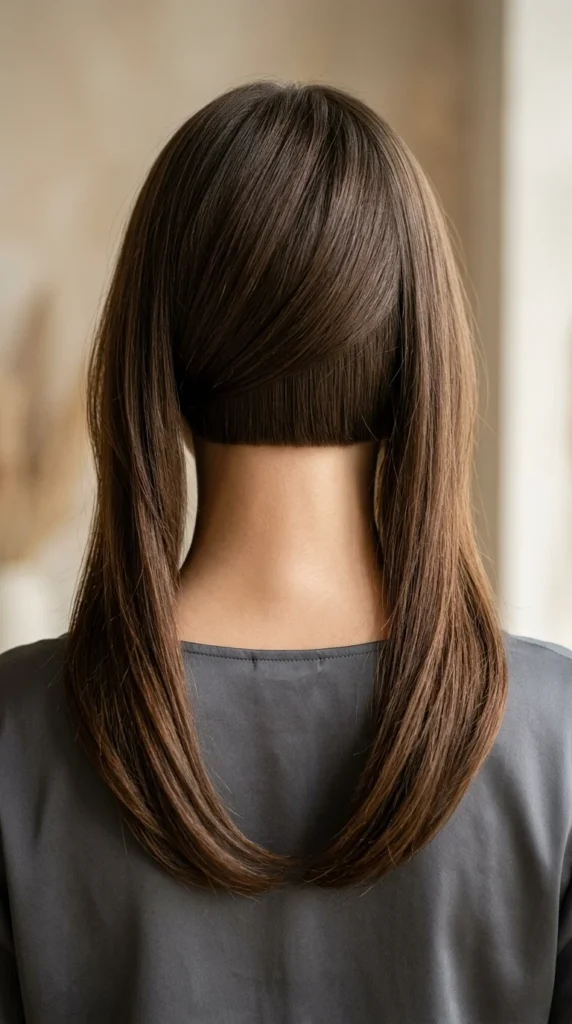
This is a “secret” technique for those with extreme damage at the nape of the neck (often caused by scarves or necklaces). The stylist cuts a very small, blunt layer right at the base of the skull. This removes the “rats nest” that often forms there. The rest of the hair then falls over it, hiding the short cut but benefiting from the removal of the tangles that cause further breakage.