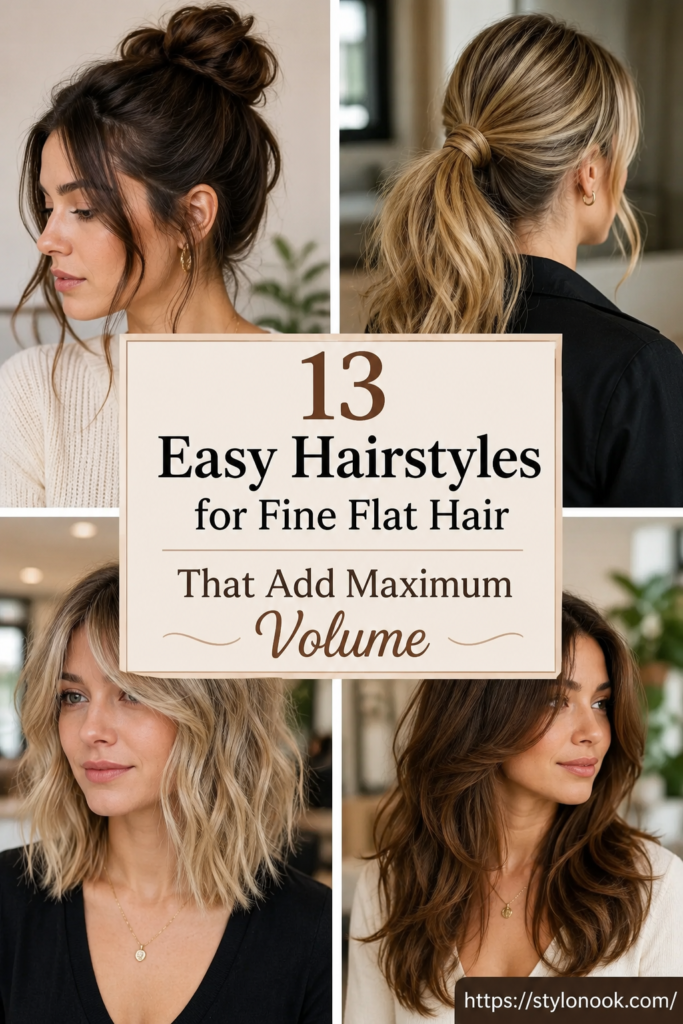

Fine hair often feels like a constant battle against gravity. You spend an hour styling it, only for it to fall limp the moment you step out the door. The struggle is real: fine strands have a smaller diameter, and when they lack a natural curl pattern, they tend to lie flat against the scalp, making your hair look thinner than it actually is.
However, the secret to high-volume hair isn’t always found in a bottle of expensive serum. Often, it’s about the architecture of the cut and the strategy of the style. By using specific techniques to create “optical illusions” of thickness, you can transform flat hair into a bouncy, dimensional mane. Here are 13 easy hairstyles designed specifically to give fine hair maximum volume.
1. Deep Side Part
The simplest way to add instant volume to fine hair is to change your part. When you part your hair in the same spot for years, the hair becomes trained to lie flat. By flipping it to a deep side part, you are forcing the hair to stand up against its natural growth pattern.
- The Technique: Use a fine-toothed comb to create a part that starts directly above the outer corner of your eye.
- The Benefit: This creates a “cliff” effect at the roots, giving you immediate height without any heat styling.
- Pro Tip: Spritz a tiny bit of dry shampoo at the roots before flipping to help the hair hold its new position.
2. Textured Bob

A blunt, one-length haircut can sometimes weigh fine hair down. A textured bob, however, uses internal layers to create movement. When the ends are “shattered” or thinned slightly with shears, the hair becomes lighter and bounces more easily.
- The Technique: Ask your stylist for a bob that hits between the chin and the collarbone with “invisible layers” throughout.
- The Benefit: The shorter length removes the weight that drags hair down, while the texture prevents it from looking like a flat curtain.
- Style It: Use a sea salt spray on damp hair and scrunch as it dries to enhance the choppy texture.
3. The Shag
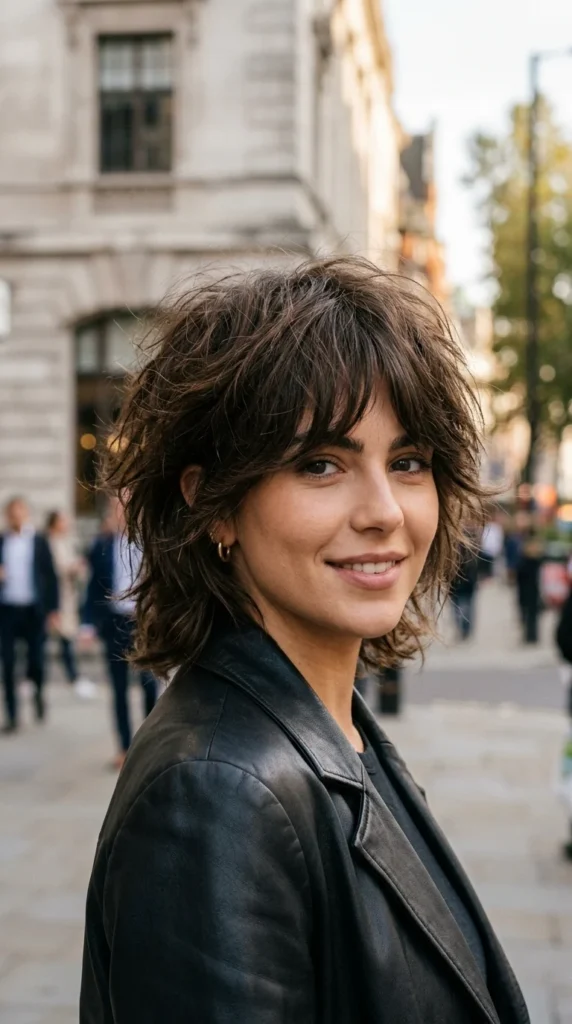
The 70s-inspired shag is a dream for fine-haired individuals. This cut is defined by its heavy layers at the crown and face-framing fringe. Because the top layers are significantly shorter than the bottom, they don’t have the weight to fall flat.
- The Technique: This style relies on “short-to-long” layering. The shortest layers are at the top of the head, providing built-in lift.
- The Benefit: It creates a “halo” of volume around the face, making the overall hair profile look much wider and thicker.
- Style It: Use a volumizing mousse and blow-dry your hair upside down to maximize the “messy” lift.
4. Wispy Fringe

If you aren’t ready for a full chop, adding a wispy fringe can change the way volume is perceived. Heavy, blunt bangs can sometimes make fine hair look “stringy,” but wispy, see-through bangs add a layer of texture to the front of your style.
- The Technique: Keep the bangs light and feathered rather than thick and blocky.
- The Benefit: It draws the eye upward and creates a focal point at the forehead, giving the illusion of more hair density at the front.
- Style It: Blow-dry the bangs with a small round brush, pulling them straight out from the forehead to avoid a “flat” look.
5. Butterfly Cut
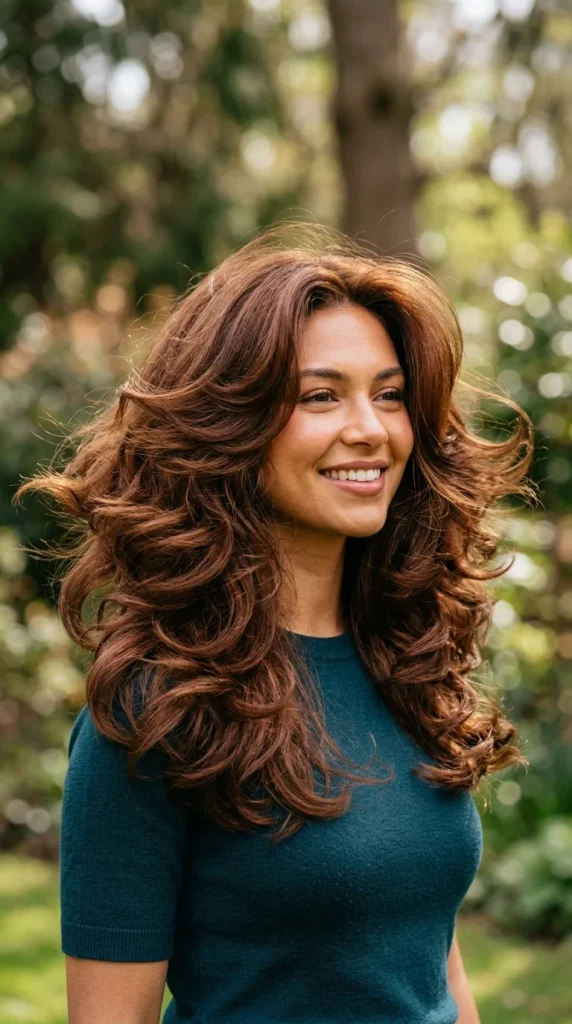
The butterfly cut is a modern take on the classic blowout. It involves very short layers around the face that are disconnected from the longer layers at the back. When styled, these shorter layers “wing out,” creating incredible width.
- The Technique: The cut creates two distinct tiers. The top tier gives the illusion of a short haircut (like a bob) while the bottom tier maintains length.
- The Benefit: You get the volume of a short cut with the glamour of long hair.
- Style It: Use large velcro rollers on the top sections of your hair to set the “wings” in place for maximum bounce.
6. Messy Top Knot
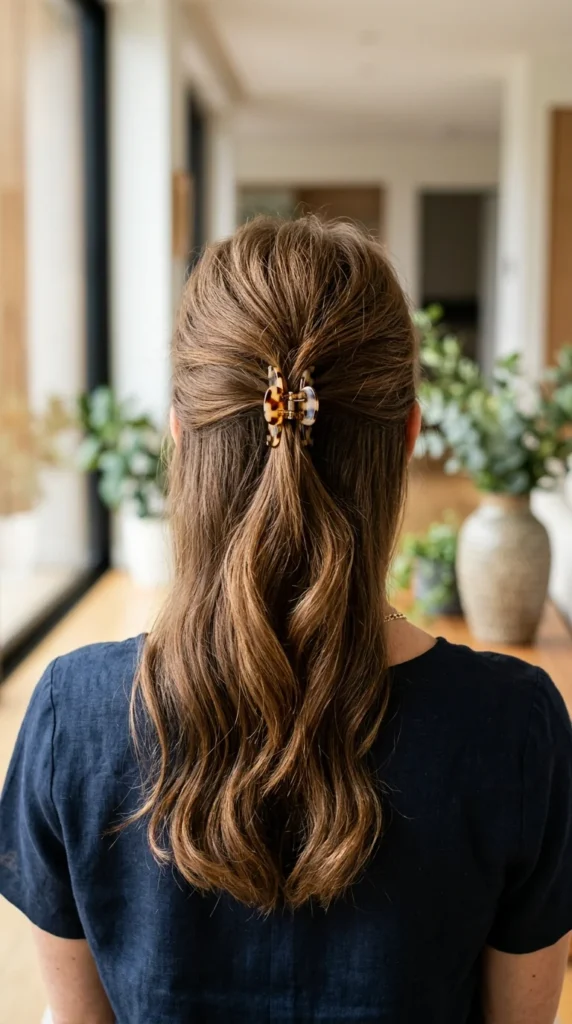
Pulling fine hair back into a tight ponytail can often highlight its thinness. A messy top knot, however, is designed to look voluminous. By loosening the hair at the scalp and “pancaking” the bun, you create a much larger silhouette.
- The Technique: Pull your hair into a high ponytail, then twist it loosely into a bun. Pull at the edges of the bun to make it appear wider.
- The Benefit: The height at the crown adds vertical volume, while the loose texture hides the scalp.
- Pro Tip: Before tying your hair up, use a teasing brush at the crown to create a “cushion” of air.
7. Voluminous Ponytail
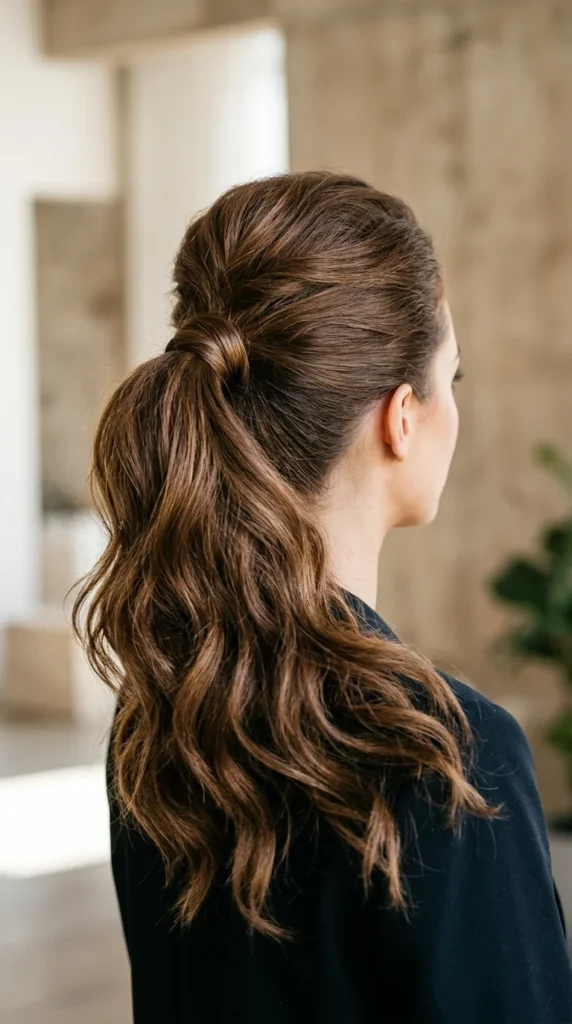
The key to a voluminous ponytail for fine hair is “doubling up.” Instead of one flat ponytail, you create two—one hidden underneath the other—or use a small claw clip inside the base of the ponytail to prop it up.
- The Technique: Divide your hair into two sections, top and bottom. Tie the bottom section into a ponytail, then tie the top section directly over it.
- The Benefit: This makes the ponytail look twice as thick and prevents it from drooping throughout the day.
- Style It: Tease the base of the ponytail for extra “oomph” and use a texturizing powder on the lengths.
8. Double Braided Crown
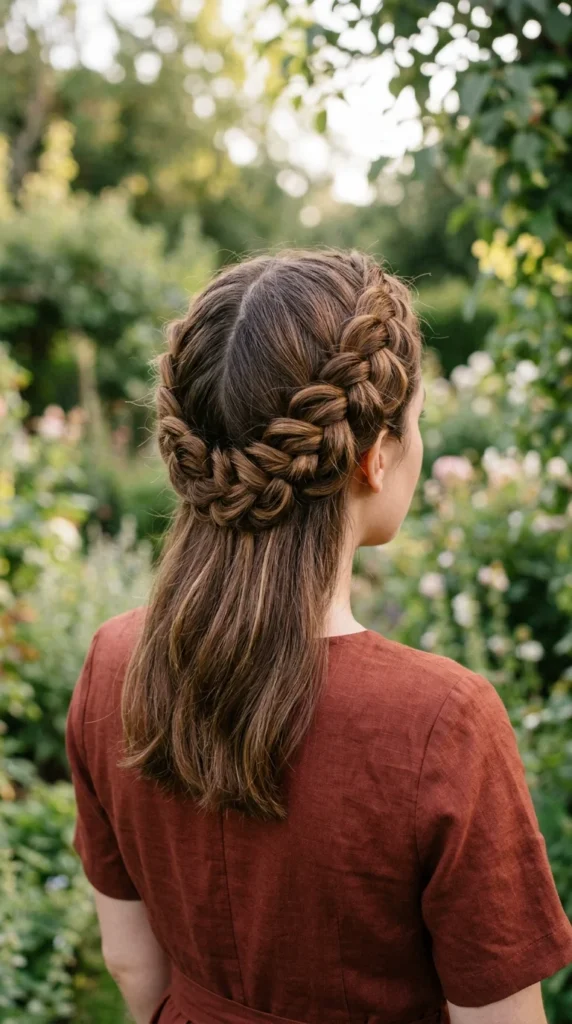
Braids are excellent for fine hair because you can “pancake” them—pulling the loops of the braid outward to make them look three times their actual size. A crown braid keeps the volume focused around the head.
- The Technique: Create two standard braids on either side of your head. Once secured, gently tug at each loop of the braid to flatten and widen it.
- The Benefit: The “pancaked” braids create a thick band of hair that adds structural volume to your head shape.
- Style It: Apply a dry texture spray before braiding to give the hair more “grip” so the braids don’t slide out.
9. Root Lift Curls
Most people start curling their hair from the mid-lengths down, which leaves the top flat. For fine hair, the curl needs to start as close to the root as possible to provide structural support for the rest of the strand.
- The Technique: Use a 1-inch curling wand. Wrap the hair around the barrel, ensuring you get the iron close to the scalp (carefully!) to “set” the root in an upward position.
- The Benefit: The “S” shape at the root acts like a spring, pushing the hair up and away from the scalp.
- Style It: After curling, do not brush the hair. Use your fingers to shake out the roots for a more natural, voluminous finish.
10. Slicked-Back Volume
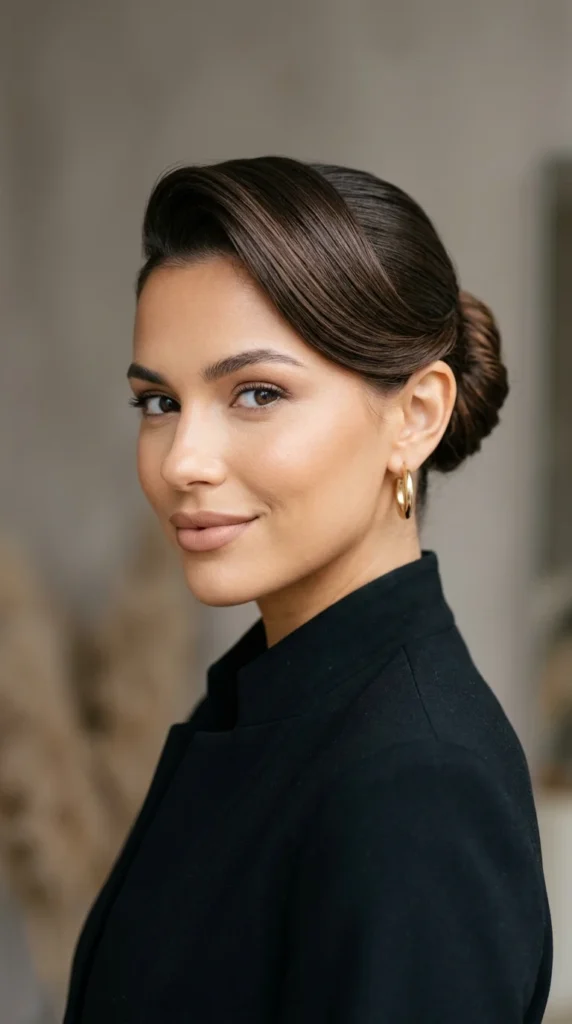
This style is perfect for a polished, “red carpet” look. Instead of slicking the hair down flat, you use product to hold the hair in an upward and backward direction, creating a sleek but tall profile.
- The Technique: Apply a volumizing mousse to damp hair and blow-dry it straight back using a vent brush.
- The Benefit: It clears the hair away from the face, while the “lift” at the hairline creates an impressive amount of height.
- Pro Tip: Use a bit of hairspray on a toothbrush to smooth down flyaways without flattening the volume you’ve created.
11. Blunt Cut

While layers are great for movement, a blunt cut is the ultimate choice for making the ends of fine hair look thicker. When hair is cut to one length at the bottom, it creates a “weight line” that gives the illusion of a fuller mane.
- The Technique: Request a “square” blunt cut with no thinning or point-cutting at the ends.
- The Benefit: Fine hair often gets “wispy” or “see-through” at the bottom. A blunt cut eliminates this, making the hair look dense from roots to tips.
- Style It: Keep the hair smooth with a flat iron to emphasize the clean, thick line at the bottom.
12. Half-Up Claw Clip
The claw clip is a fine-haired person’s best friend. Unlike hair ties that can pinch and flatten, a claw clip allows the hair to sit loosely, maintaining the air between the strands.
- The Technique: Gather the top third of your hair. Instead of pulling it tight, push it forward slightly toward your forehead before clipping it at the back.
- The Benefit: Pushing the hair forward creates a “pomp” effect, adding height to the crown while the rest of the hair hangs freely.
- Style It: Use a “mini” claw clip rather than a large one to avoid weighing down the style.
13. Retro Waves

Retro waves rely on a uniform pattern where the waves “stack” on top of each other. This stacking creates a structural thickness that fine hair usually lacks.
- The Technique: Curl all sections of your hair in the same direction. Once the curls have cooled, brush them out thoroughly with a boar-bristle brush until they merge into a single wave pattern.
- The Benefit: The combined volume of the merged waves creates a much wider hair profile than individual curls would.
- Pro Tip: Set the style with a high-hold hairspray while the waves are pinned in place to ensure the volume lasts all night.