
African braids are far more than just a fashion statement; they are a profound expression of culture, history, and individual artistry. For centuries, these styles have been used to signify status, age, and community, evolving from ancient traditions into modern global trends. What makes African braiding techniques truly remarkable is their versatility and longevity. Whether you are looking for a protective style to help your natural hair grow or a bold new look for a special occasion, braids offer endless possibilities.
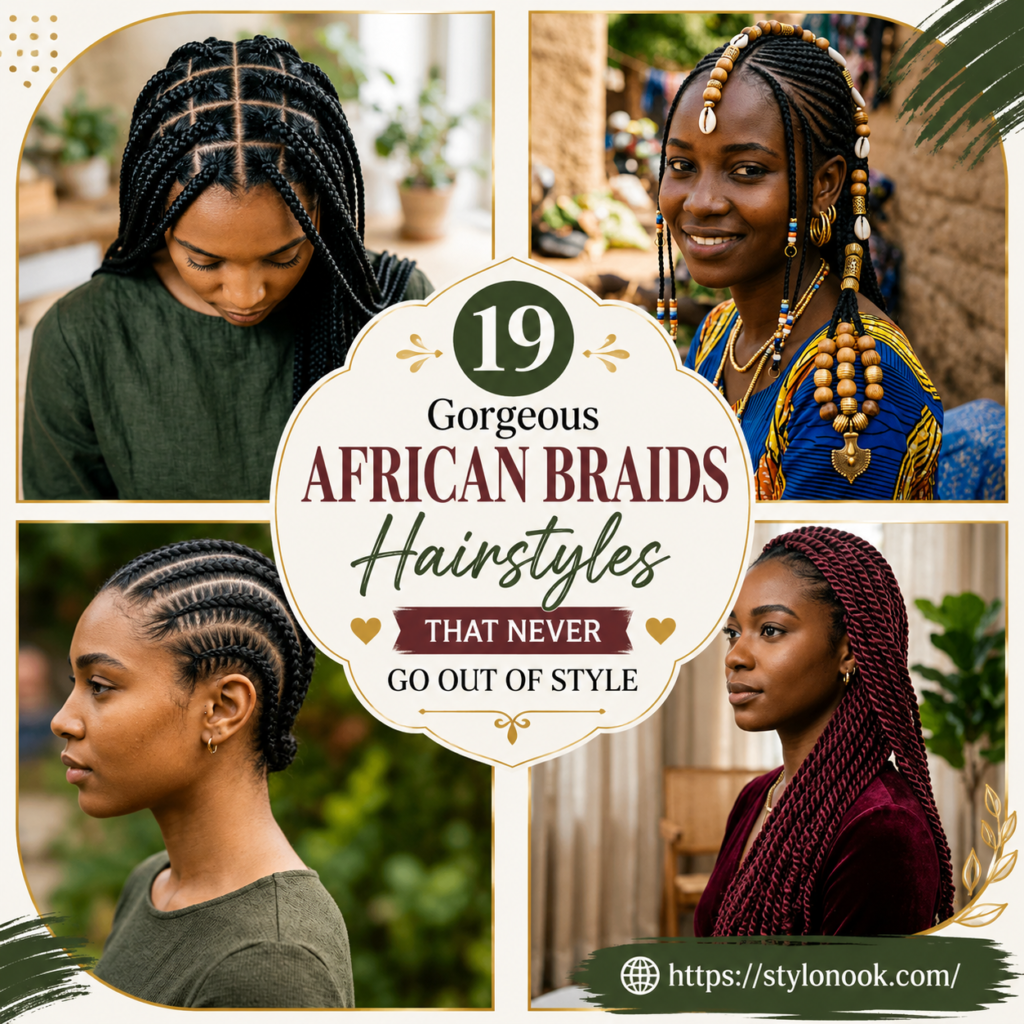
In this guide, we explore 19 gorgeous African braid hairstyles that have stood the test of time. These looks remain as popular today as they were decades ago, proving that true style never goes out of fashion.
1. Box Braids
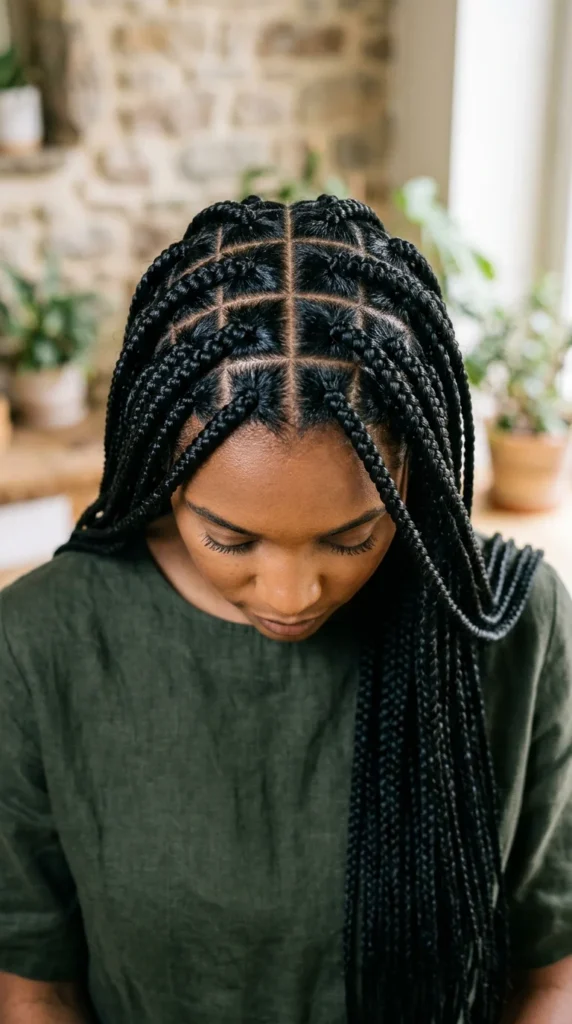
Box braids are the undisputed queen of protective styling. Named for the square-shaped hair divisions used during the braiding process, this style offers incredible versatility. You can wear them loose, tie them into a massive top-knot, or even style them into space buns. Because they aren’t attached to the scalp like cornrows, they offer a full range of motion and can be styled in dozens of ways.
2. Cornrows
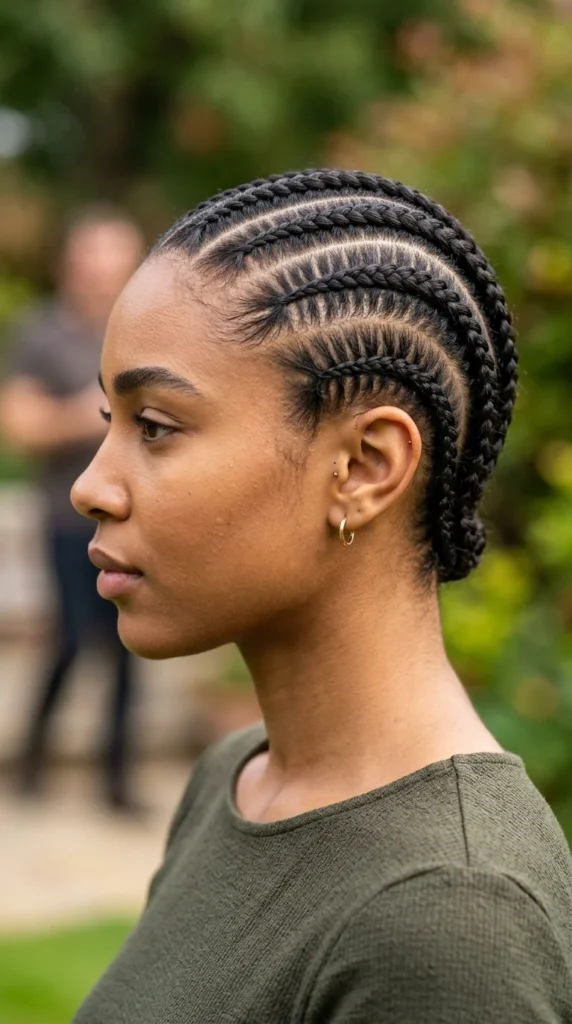
Cornrows are perhaps the most iconic African braiding style. These are flat braids created by weaving hair close to the scalp in a continuous, raised row. While the classic “straight-back” look is a perennial favorite, modern stylists can create elaborate geometric patterns and curved lines that turn the scalp into a canvas of living art.
3. Fulani Braids
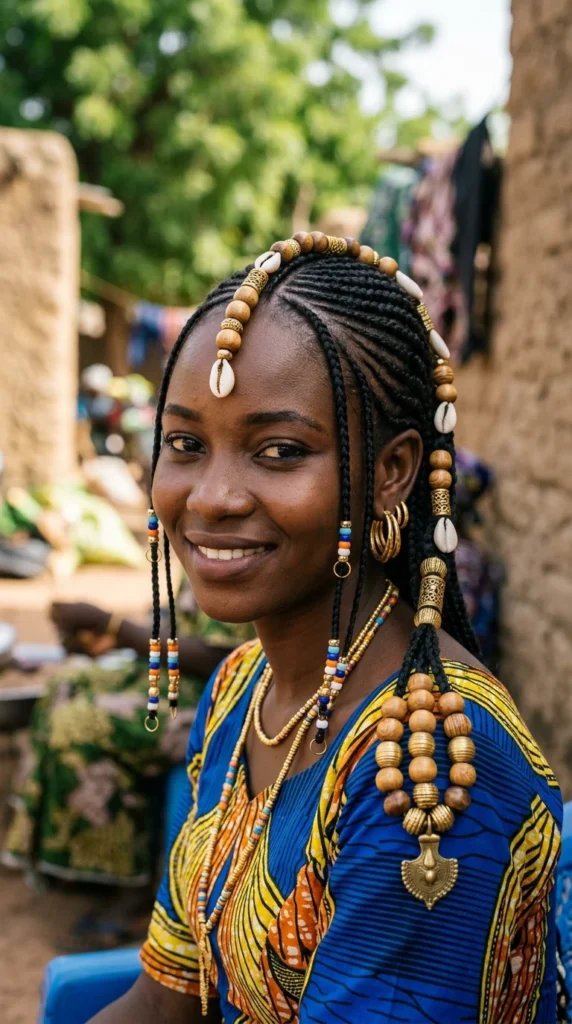
Inspired by the Fula people of West Africa, Fulani braids are characterized by their specific patterns: a central braid down the middle, a few braids braided toward the front near the temples, and the rest braided backward or left hanging. Adorned with beads, cowrie shells, and metallic cuffs, this style is a beautiful blend of tradition and royalty.
4. Senegalese Twists
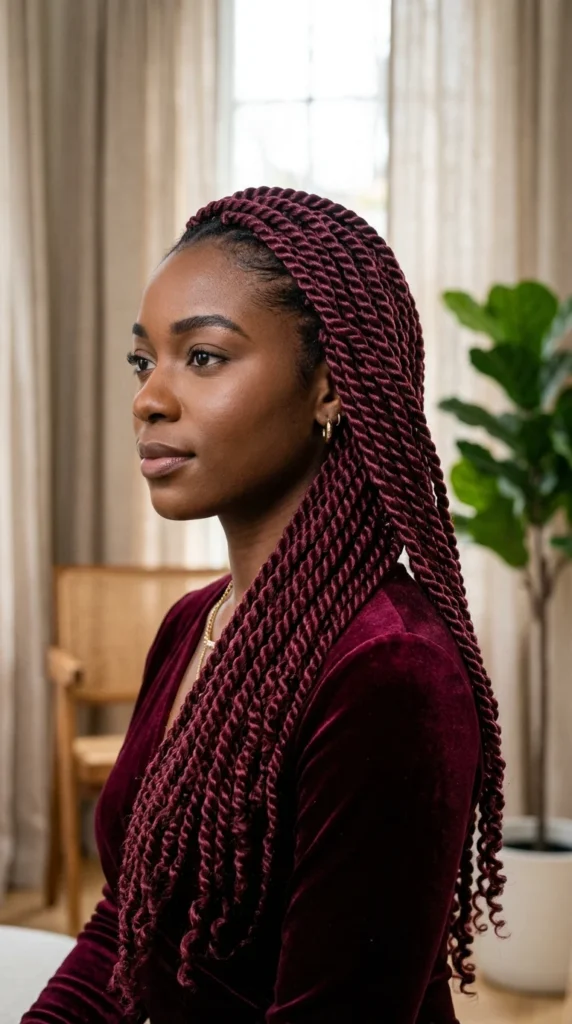
Also known as rope twists, Senegalese twists use a two-strand technique rather than the traditional three-strand braid. Using Kanekalon or silkier hair extensions, these twists have a smooth, refined finish that looks sophisticated and elegant. They are easier to take down than traditional braids and offer a distinct, twisted texture that catches the light beautifully.
5. Ghana Braids
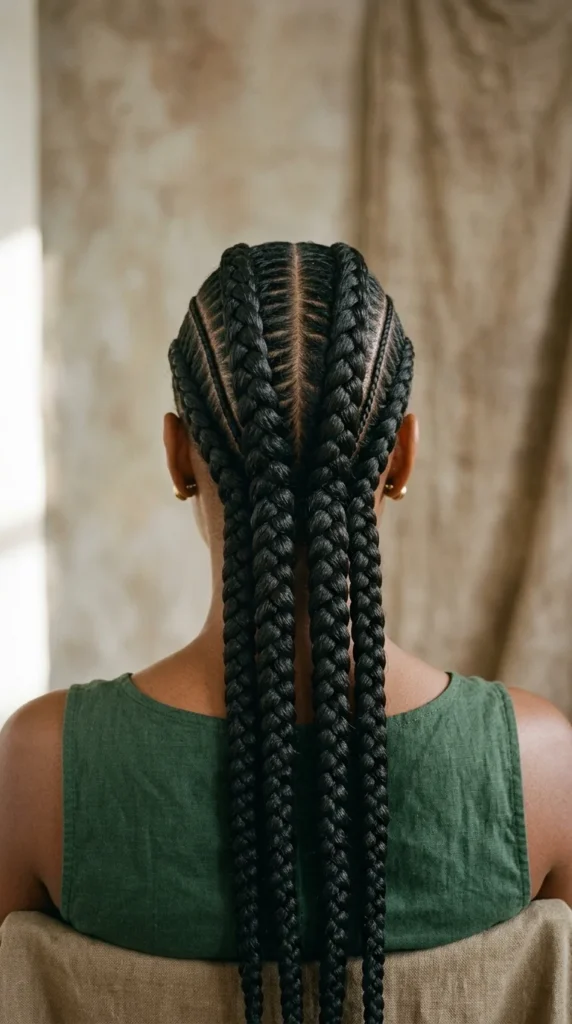
Ghana braids, also known as banana braids or Cherokee braids, are a variation of cornrows that require a specific “feed-in” technique. This creates a look where the braid starts small at the hairline and becomes significantly thicker as it reaches the nape of the neck. This tapering effect creates a bold, sculptural look that is both modern and timeless.
6. Micro Braids
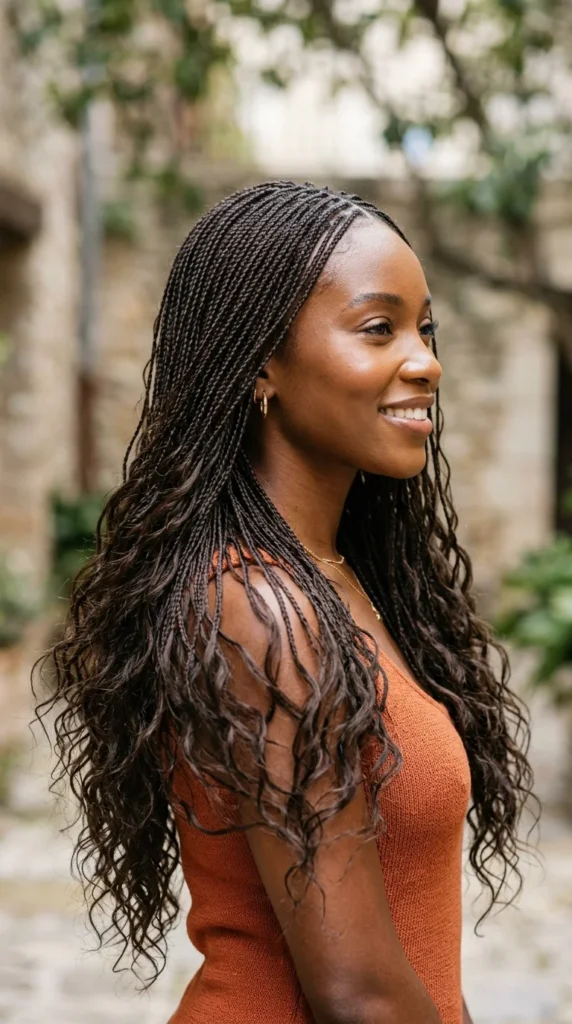
Micro braids are for those who want the look of loose hair with the manageability of braids. Because they are so tiny, they can be styled exactly like natural hair—curled, straightened, or put into an ponytail. While they take a long time to install, the result is a delicate, feminine look that lasts for months.
7. Lemonade Braids

Made famous by Beyoncé’s visual album, Lemonade braids are long, side-swept cornrows. They typically feature very neat, thin-to-medium braids that all flow in one direction. It is a powerful, asymmetrical look that frames the face beautifully and works perfectly for both casual and formal settings.
8. Goddess Braids
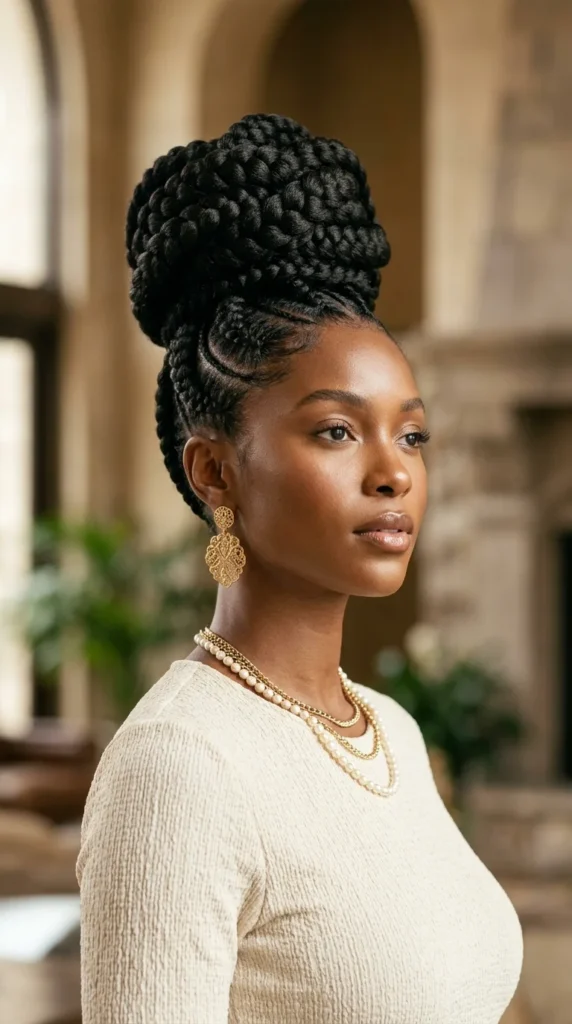
Goddess braids are essentially a thicker, bolder version of cornrows. They sit high off the scalp and are often styled into intricate updos or halos. Because the braids are larger, they take less time to install but provide a high-impact, queenly aesthetic that is perfect for weddings or red-carpet events.
9. Passion Twists
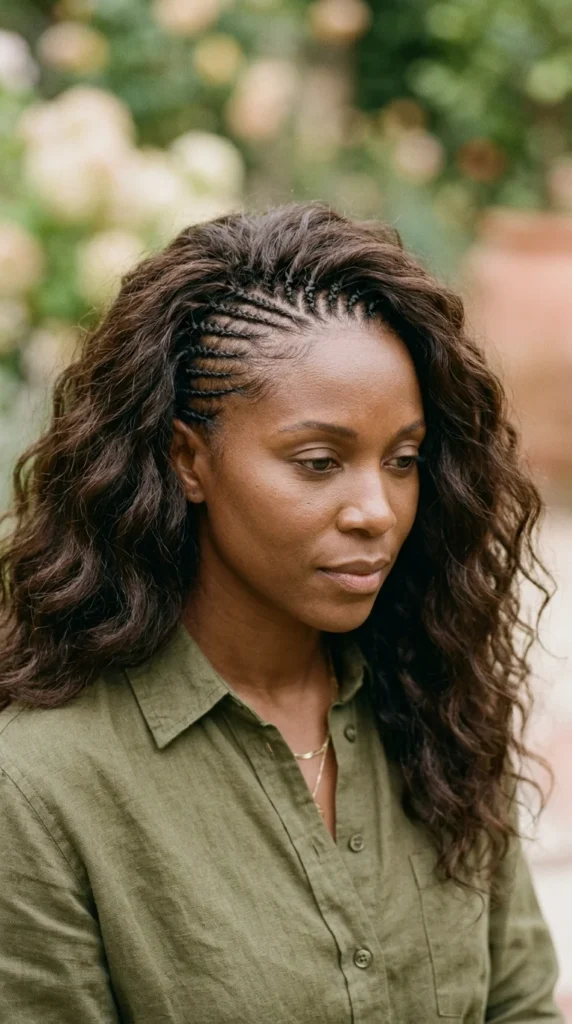
Passion twists are a modern favorite for those who love the “boho-chic” look. Created using Freetress Water Wave hair, these twists have a distressed, curly texture that looks very natural. They are lightweight, bouncy, and get better as they age, making them the ultimate low-maintenance summer style.
10. Marley Twists

For those who prefer a more natural, Afro-textured look, Marley twists are the go-to choice. They use Marley hair extensions, which have a kinky, coarse feel. Unlike the shiny finish of Senegalese twists, Marley twists look incredibly realistic and provide great volume and texture.
11. Knotless Braids
Knotless braids have revolutionized the braiding world. Traditionally, box braids start with a small knot of extension hair at the scalp. Knotless braids, however, start with your natural hair and “feed in” the extensions as the braid progresses. This results in a flatter, more natural look that causes significantly less tension on the scalp.
12. Tribal Braids
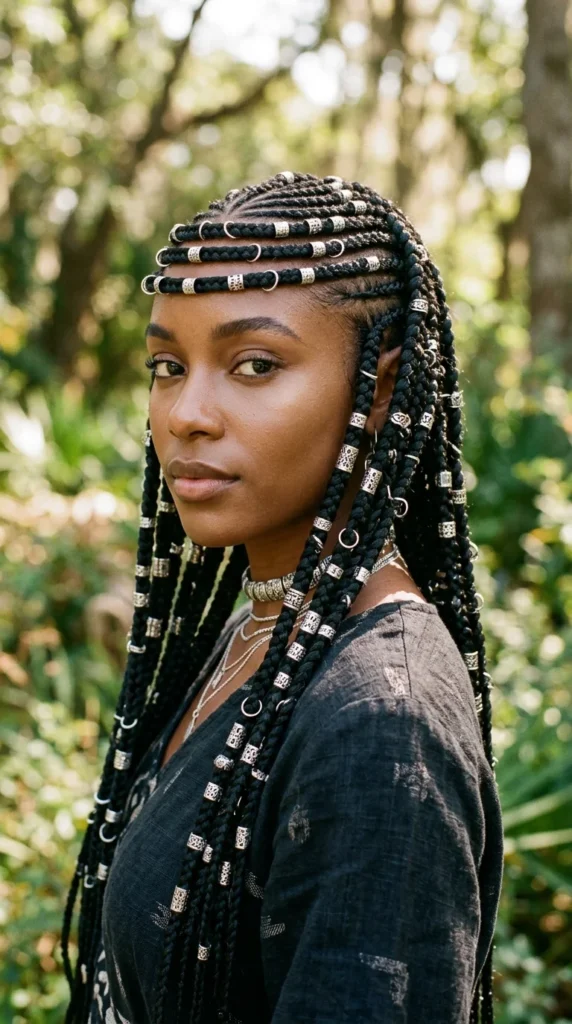
Tribal braids are an umbrella term for styles that incorporate various traditional African patterns. They often combine different thicknesses, directions, and accessories. This is the ultimate “custom” hairstyle, allowing the braider to create a unique geometric masterpiece tailored to the individual’s face shape.
13. Fishtail Braids
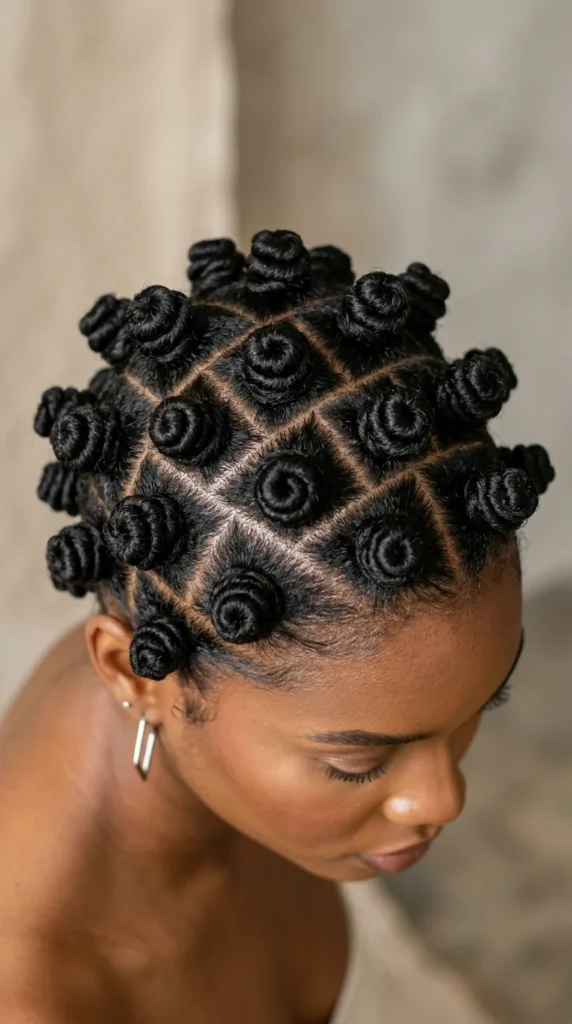
While often associated with Western styles, the fishtail technique has roots in African hair artistry. When applied to textured hair or extensions, the fishtail braid becomes a thick, sturdy, and visually stunning pattern that looks far more complex than a standard three-strand braid.
14. Butterfly Locs

Butterfly locs are a variant of faux locs that embrace imperfection. The “butterfly” effect is created by using a thumb-loop method to create messy loops along the length of the loc. The result is a romantic, ethereal, and bohemian look that is incredibly lightweight and stylish.
15. Crochet Braids

Crochet braids are a technique rather than a single style. Hair extensions are “looped” through a base of cornrows using a crochet hook. This allows you to achieve massive volume and textures—from tight curls to straight hair—in a fraction of the time it takes for individual braids. It is one of the most protective methods for those looking to give their natural hair a complete break.
16. Bantu Knots
Bantu knots originated from the Zulu people of Southern Africa. They are created by sectioning the hair and twisting it until it coils into a small bun. Not only is this a striking, bold look on its own, but when the knots are “unraveled,” they produce beautiful, heat-free curls known as a “Bantu knot out.”
17. Tree Braids
Tree braids are a “hidden” braid style. The hair is cornrowed, but small strands of loose extension hair are pulled out of the braid at every turn. By the time the braider is finished, the cornrows are completely covered by a mane of loose hair. It’s the perfect compromise for someone who wants the look of a weave but the scalp access of braids.
18. Feed-in Braids
Feed-in braids are the secret behind the “seamless” look. By adding small amounts of extension hair gradually rather than all at once, the stylist creates a braid that looks like it is growing naturally from the head. This technique is used to create the most polished and high-fashion cornrow styles seen on celebrities today.
19. Havana Twists
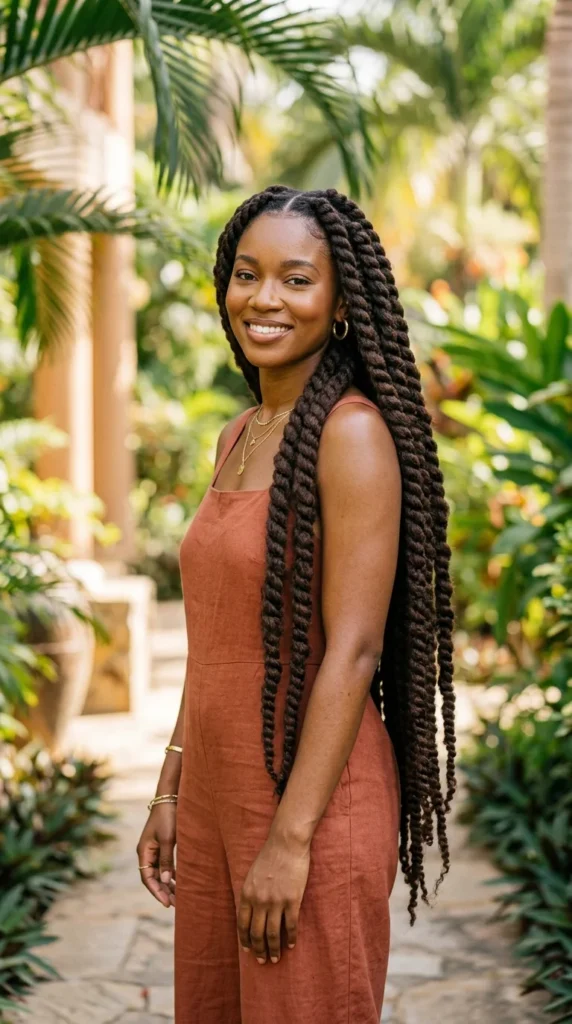
Havana twists are the larger, more voluminous cousins of Marley twists. They use a similar kinky hair texture but are much chunkier. Despite their size, they are usually very lightweight because the hair used is airy. This style is perfect for those who want a dramatic, high-volume look that exudes confidence and heritage.
Maintaining Your Braids
To keep these styles looking fresh and to ensure your natural hair remains healthy, follow these essential tips:
- Moisturize the Scalp: Use a light oil or a spray-on conditioner to keep your scalp hydrated.
- Wash Gently: You can wash your braids! Focus on the scalp using a diluted shampoo and rinse thoroughly.
- Night Care: Always wear a silk or satin scarf/bonnet at night to prevent frizz and friction.
- Don’t Leave Them in Too Long: Most braided styles should be kept for 6 to 8 weeks maximum to prevent matting and hair breakage.
African braids are a testament to the beauty of Black hair and the ingenuity of African styling traditions. Regardless of which style you choose, you are participating in a legacy of beauty that spans generations.